As I said in the introduction to this blog I’m not only going to be writing about the places I visit nor the pathways that take me there, I will also be writing about the books I’m reading and basically anything on my mind.
I started reading The Color of Law when as I arrived in Cambridge and I finished it on my second day in Brussels. In this book, Richard Rothstein goes into to depth about de jure segregation in America, specifically pertaining to African Americans housing. For those normal people out there who don’t know what de jure segregation is, it is “segregation by intentional government action”. For example, the Jim Crow laws implemented after the end of reconstruction after the civil war is considered de jure segregation.
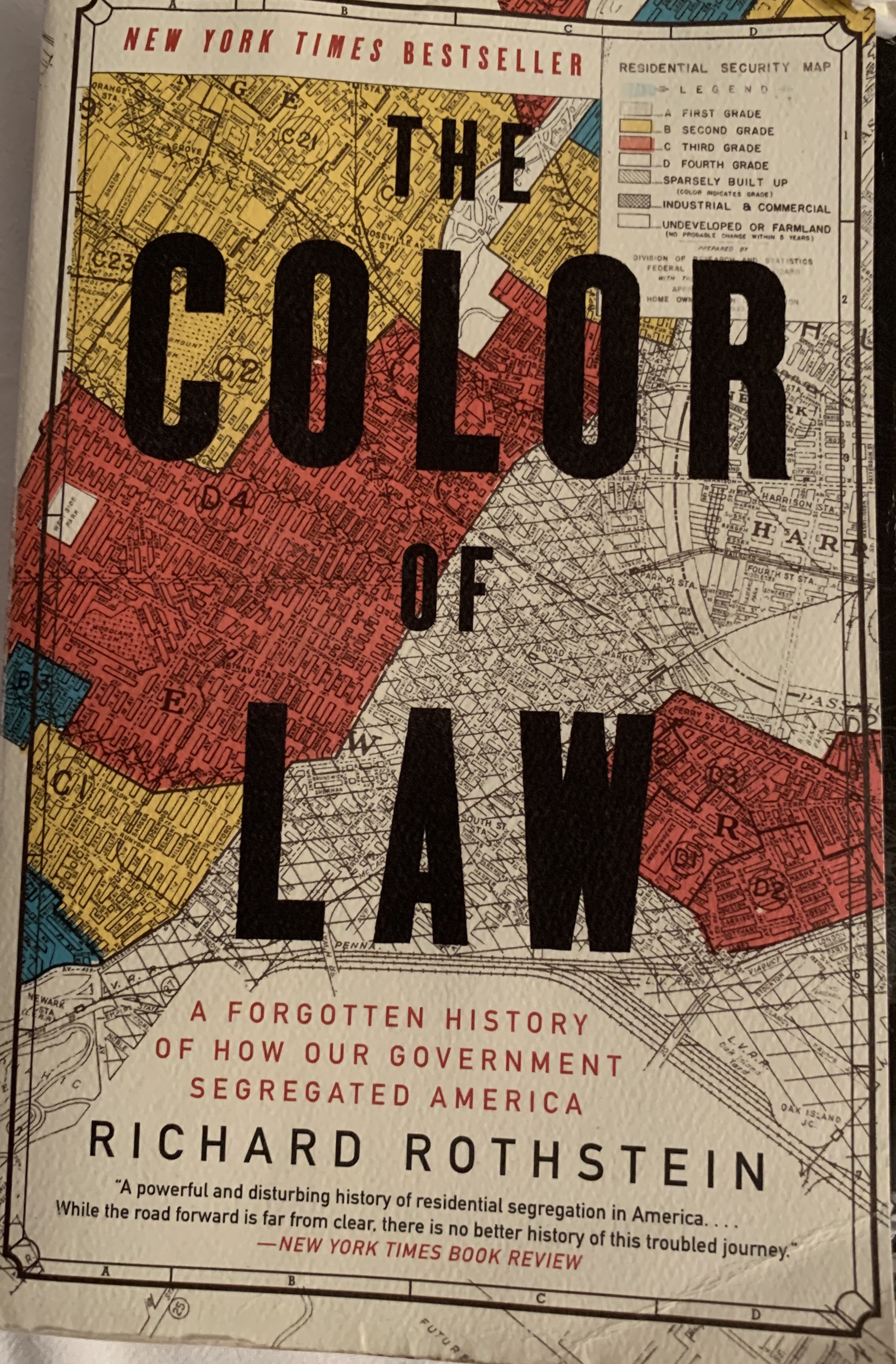
Rothstein contends that de jure segregation did not end when most people think it did, with the voting rights act passed in 1965. It officially ended with the passing of the fair housing act of 1968, unofficially the end has no date, but I’ll get into that later. While de jure segregation ended, the effects that 246 years of slavery and another 103 years of segregation and treating African Americans as second class citizens were not fixed over night, nor are they fixed today.
If you are interested in this topic please find the time to read this book it is insanely interesting. However, if you don’t have the time to read a book but do have the time to read my blog I’m going to outline some major points written in the book.
The New Deal
The New Deal was a set of legislation put forth by President Franklin D. Roosevelt during the Great Depression (1929-1939). It is considered by the majority of economists to be the savior of the American economy and in turn is celebrated in America. However, given the bureaucracy of America at the time, certain compromises had to be passed to push these bills through congress. Yes, you guessed it, African Americans were excluded from the majority of the New Deal legislation. When they were allowed to work the possibility of advancement was non-exist. Furthermore, New Deal housing agencies drew up maps of metropolitan areas nationwide. The towns in which African Americans resided were colored in red as to caution appraisers not to approve loans in these areas. Finally, the New Deal set out to promote certain industries by increasing the minimum wage in chosen industries. To get this through congress however, industries with lots of African American workers, like agriculture for example, were excluded from this.
WWII
During World War II the need for manpower to build ships in places like San Francisco was high (Rothstein chose San Francisco due to its traditionally liberal character to show that segregation happened everywhere). At first only White men were allowed jobs, then white women were allowed to join the ranks, and then finally African American men and then African American women as well. Federal housing was built solely for whites originally, but as the demand for housing grew within the African American communities small, segregated, African American housing was built far away from the cities. The housing meant for African Americans was poorly built and made to be temporary, although this housing would end up being the norm in segregated African American communities. Furthermore, after the war the famous G.I. Bill, which gave veterans the opportunity to regain wealth they had lost during the war, was not available to African Americans. Finally, during the war there was a large migration of African Americans from the south to the north in search of jobs. The African Americans who received jobs were put in the lowest paying jobs and had no chance of moving up the latter.
Infrastructure
While this is only briefly addressed in the book, I felt it was an extremely important factor in the story of segregation in America. In 1956 Dwight D. Eisenhower began developing an international highway system that would create jobs, which African Americans weren’t allowed to join, and connect the country. That being said, to build such massive structures towns would have to be demolished. The Eisenhower administration systematically chose poor and even middle class African American communities to demolish. African Americans were given limited time to find new housing and were not reimbursed. This act pushed middle class African Americans into poorer communities and continued the concentration of African Americans in deteriorating low-income communities. In addition, local and state governments would only zone areas for the construction of African American communities near factories, waste plants, and other industrial entities.
The Federal Housing Administration (FHA)
The Federal Housing Administration has one of the largest, if not the largest, roles in government sponsored segregation. As most of you know when one wants to buy a house a loan must be taken out. The FHA would not back loans given to African Americans and therefore banks would not give out loans. Furthermore, the FHA would not back community projects which were not segregated or put African Americans and Whites in close proximity to each other.
Private Agreements
The Supreme Court deemed that the laws of America could not infringe upon the contracts between two individuals, this decision was later reneged upon. As federal law restricting segregation came to fruition this court decision would be influential in keeping segregation alive for years to come. In the contracts of homes sold there were stipulations that this house never be sold to anyone not of Caucasian decent. If someone attempted to sell this house to or even rent it out to African Americans, the buyer, the seller, and the real estate agent could be sued and even criminally prosecuted.
IRS Support and compliant regulators
Up until 1967 the IRS supported academic and religious foundations which perpetuated the growth and sustainment of segregation in America by continuing to subsidize these institutions even when they actively helped segregation flourish. In addition, banks and thrifts were allowed to discriminate against African American due to the fact that they deemed African Americans as a risky investment.
* This argument that African Americans were too risky of an investment was used as a justification throughout this period. People argued that the introduction of African Americans into a community would lower the values of the homes in said community. The opposite was true however because desperate, middle class, African Americans would pay exorbitant prices to move into the nicer white neighborhoods.
Suppressed incomes
This one really shocked me… it’s insane how creative horrible people can get. Appraisers who went throughout the states appraising houses in communities would give higher appraisal ratings to African American communities so that they would have to pay exorbitantly high taxes.
State-Sanctioned violence
When African Americans did manage a way to get themselves into the more well preserved white communities they were met with further hardships. The general tactic of a white community when an African American moved in was to try and buy the house from them. Committees would be formed and pools of money would be gathered to make a great offer. If these offers were rejected protests and riots would ensue. The inevitable violence that came from these demonstrations was not hindered by police and, in fact, on many occasions the police offers who were detailed to protect the household encouraged the rioters. Furthermore, after these events went to court it was usually the African American buyer, the seller of the home, and the real estate agent who were fined or imprisoned not the rioters.
Modern Day Consequences
Look I can list off a bunch of statistics proving the harm of segregation, statistics like African American children get lead poisoning at twice the rate that white children do because they live in areas that have lead paint that is peeling off walls, but the fact of the matter is this: African American’s living situations today, which have inflated the racial wealth divide, the racial health divide, and the racial academic divide, were directly made possible due to the United States government de jure segregation.
The United States has failed the African American population in this country since 1619 when the first slave was brought to Jamestown. This book details a specific topic during a specific time period, but cannot encapsulate the harm the American government has enforced on this race of people. Nor can this summary of the book encapsulate the full content within its pages. The question of how or even if we should repay African Americans for the injustices committed upon them rises out of this book. I’m going to be giving y’all my opinion on that in my next post.




















 Josh’s Bike Trip