The Rijksmuseum is the heart and soul of the classical art scene in Amsterdam. First opened in 1800 this museum houses paintings, sculptures, ceramics, jewelry and many more relics. During my time here the museum had a Rembrandt exhibition, which included Rembrandt’s famous Night Watch, that emphasized the quality of art shown within these museums walls. Below I’ve attached a few of my favorites – I tried to stay away from the more famous ones and show you the less known ones that caught my eye but, some of the famous ones will be included as well.
July by Jacobus van Looy
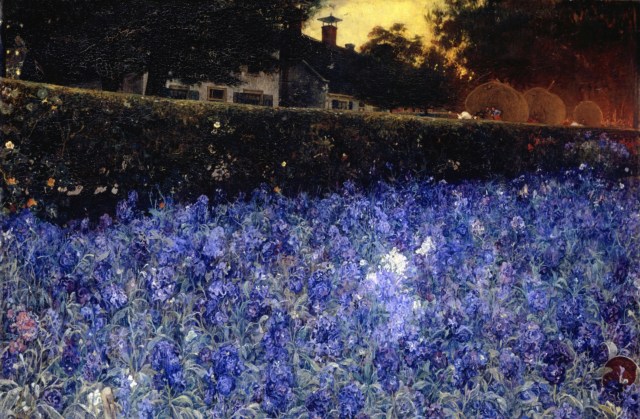
Jacobus van Looy was a Dutch painter who found success during the Netherlands’ Golden Age. Looy is most famous for his portraits but, for this specific painting Van Gough’s depiction of landscapes inspired him to do his own, more realistic version, of a post-impressionist landscape. The painting is of a sea of blue flowers encroaching into the shadows. In the background Looy’s house and the rising sun can be observed.
Woodland Pond at Sunset By Johan Hendrik Weissenbruch
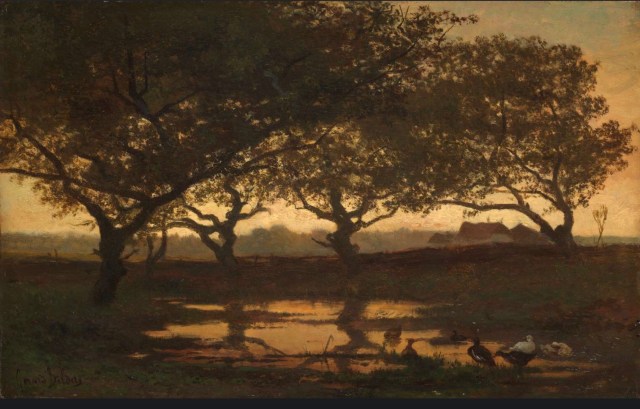
Johan Hendrik Weissenbruch was a Dutch artist who, like so many others on this list, made a name for himself during the Netherlands’ Golden Age. Being born into an artistic family Weissenbruch was destined to be an artist. He began painting at the age of 16, mainly painting detailed cityscapes. As he grew he became infatuated with the colors of nature, Woodland Pond at Sunset is his attempt to highlight the beauty of Dutch sunsets.
A Windmill on a Polder Waterway by Paul Joseph Constantin Gabriël
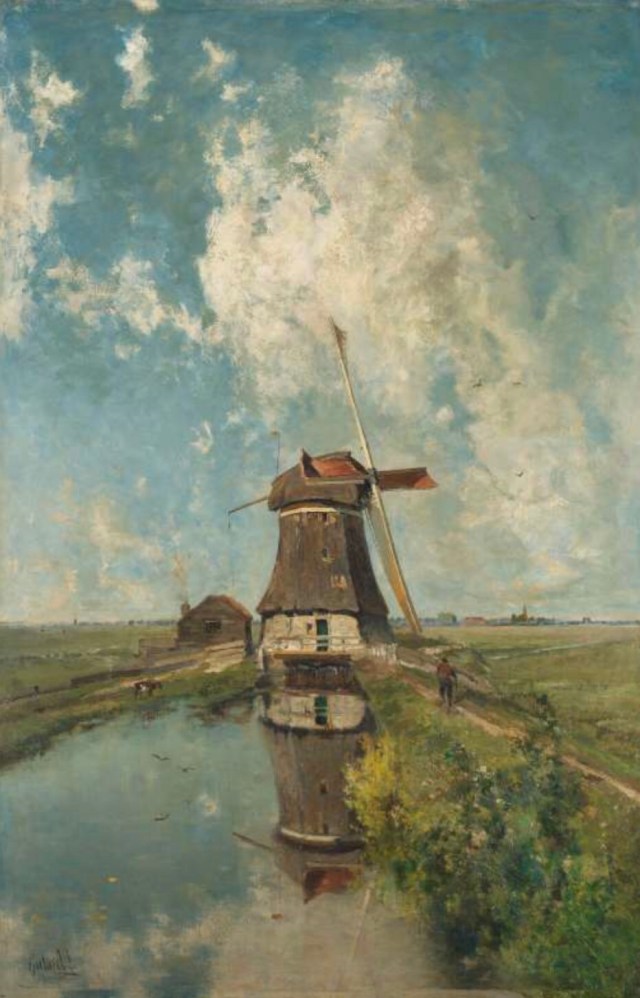
Unlike many other painters Paul Joseph Constantin Gabriël was forced into art at an early age. A natural proficient in art his large family turned to him for income when his father died. Gabriël, who grew up in Amsterdam, became an apprentice to Koekkoek who steered him in the direction of landscapes. I was drawn to this painting not for the center point but rather the clouds that surround it. The clouds, in my opinion, are a true representation of the beauty of chaos.
Wooded view near Babizon by Johan Hendrik Weissenbruch
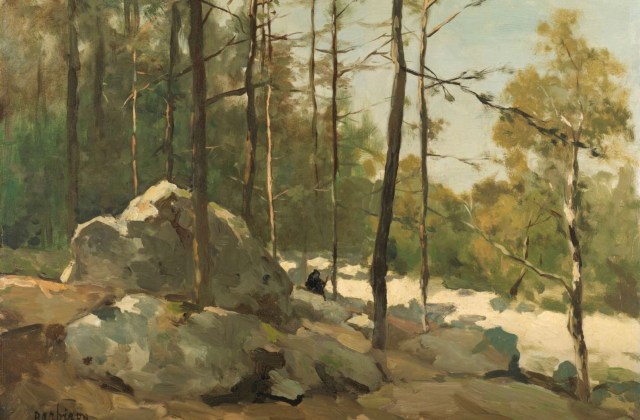
Here we have another one of Weussenbruch’s paintings. Painted on the outskirts of a small Dutch town this effectively self portrait of Weissenbruch points out how infinitesimally small humankind is in comparison to nature. However, the reason this painting grabbed my attention is due to the stark contrast of nature and man. The ambiguous man in this landscape is completely black, as if consumed by a shadow, which pops out at the viewer when put in a scene of lighter more dulled colors.
Forest Scene by Barend Cornelis Koekkoek
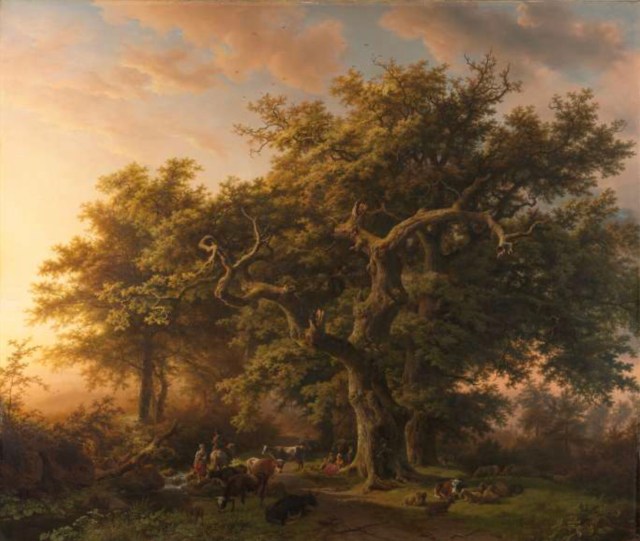
Born in a small province in the Netherlands Koekkoek began his study of art under his father. He then enrolled into the Middelburg Academy and then the Academy of Amsterdam after he had already travelled through the Alps painting. Koekkoek’s success has become synonymous with that of the Dutch Romantic movement as he tended to portray his pieces in a more beautiful and idealistic way. This is most aptly shown in Koekkoek’s Forest Scene.
Shipwreck off a Rocky coast by Wijnand Nuijen
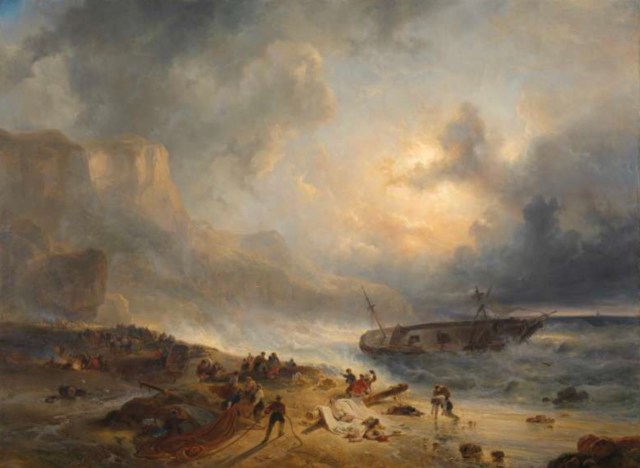
Wijnand Nuijen was a Dutch artist inspired by the Romantic artists of France. In his late teens Nuijen travelled to France to paint villages and the coast and in his time there he was inspired by artists such as Richard Parkes Bonington. In Shipwreck off a Rocky coast Nuijen is showing, like so many artists on this list, this insignificance of mankind in comparison to nature. While the scene being expressed is one of turmoil the background composes most of the art. Furthermore, the sun, shining onto the shipwrecked survivors, becomes the focal point of the piece demanding the viewers attention.
Italian Landscape with Umbrella Pines by Hendrik Voogd
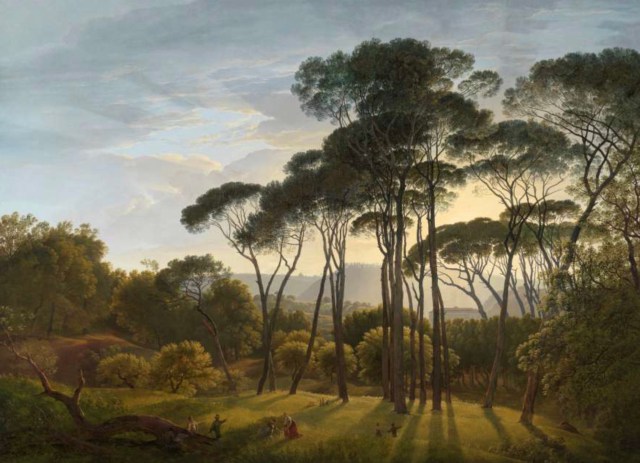
Hendrik Voogd, also known as the Dutch Claude (Claude Loraine was a famous French painter), was a Dutch painter who spent nearly his entire life in Rome. This specific painting is intriguing simply due to the precision and subtle additions that the painter added to draw ones attention. Thousands of leaves are displayed in this painting and yet, the markers of a paint stroke are hard to find. Furthermore, when looking at the people in this painting the majority of them are pointing towards the setting sun which Voogd intended to be the focus of the painting.
Battle of the Downs by William Van de Velde
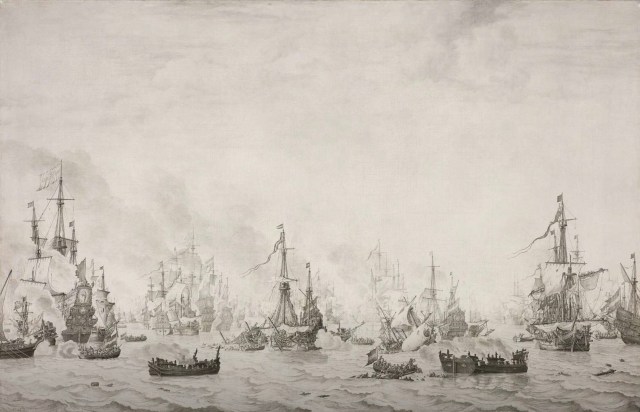
William Van de Velde was born to a fisherman in Leiden, Netherlands. Many hypothesize that he was actually born at sea given his aptitude for sailing and painting the ocean. The Battle of the Downs, as referenced above, was a battle between the English Navy and the Spanish Armada fought in the English Channel. The English victory marked a turning point in history which had the English commanding the seas opposed to the Spanish.
The Threatened Swan by Jan Asselijn
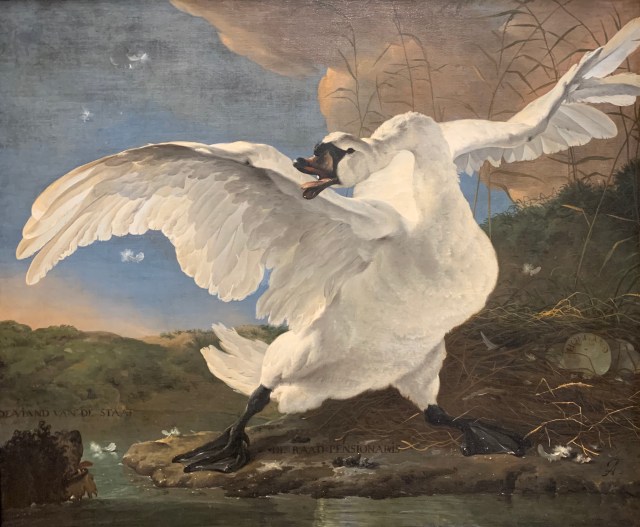
Jan Assellijn while having Dutch heritage was born in France and only moved back to his motherland when he married. The Threatened Swan is widely regarded as his best piece of artwork. The image shows a swan, which when shown in real life is life sized, protecting her eggs from a dog(shown in the bottom left corner). This painting, even though he never intended it to be, became a symbol of Dutch national resistance. Late on, under different ownership, people inscribed “Holland” on one of the eggs and “enemy of the state” next to the dog.
 Josh’s Bike Trip